Posted on — Leave a comment

Trails of Hope and Terror – The Search for Better Life and Compassion

Trails of Hope and Terror (2017)

Trails of Hope and Terror (2017) – A Haunting Documentary of Migration and Humanity

The documentary Trails of Hope and Terror (2017), directed by Vincent De La Torre, takes viewers into the perilous journeys of Central American and Mexican migrants who cross the U.S. border—fueled by hope, terror, necessity, and the weight of history. The film does not just ask “Why do they come?” but also challenges the systems that make such journeys almost inevitable.

Overview of the Film

With a runtime of approximately 53 minutes, Trails of Hope and Terror combines first-hand testimonies, desert footage, interviews with humanitarian workers and legal professionals, and a framing of the long arc of U.S.–Latin American border policy—from NAFTA and Operation Gatekeeper through to modern crises. The two young women featured in the film, Sandra and Josseline, become emblematic of thousands whose journeys are tethered to both aspiration and risk.

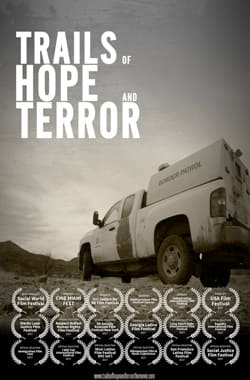
Scene from Trails of Hope and Terror (2017)

Festival Recognition & Reception

One of the film’s remarkable achievements is that it was selected for over 18 film festivals, underscoring both its relevance and global resonance—though it remains under-seen in mainstream circles. Trails of Hope and Terror has gathered positive reviews and strong audience responses during its festival run. According to its IMDb page, it has drawn favorable feedback for its unflinching look at migration and its moving documentary style.

Positive Critical Comments

The film received praise from CWMission.org for its compassionate and insightful portrayal of migration, describing it as “a powerful document of the invisible journeys” and “a film that lets migrants speak, rather than being spoken about.” On IMDb, many reviewers also commend the film for its authenticity and empathy, calling it “one of the most humane migration documentary movies” and “a story that stays with you long after watching.”

My Personal Thoughts – Why It Resonated

Watching Trails of Hope and Terror felt like a wake-up call. What struck me most was how it captured both the vastness of the desert and the intimacy of each person’s story. It made me pause and consider: when someone walks through that landscape, what are they imagining? What have they lost, and what are they risking?

The film doesn’t sensationalize the journey—it respects the people. And that restraint becomes its strength. I found myself especially moved by the contrast between the hopeful moments (small smiles, glimpses of community) and the harsh realities (border patrol, harsh terrain, legal limbo). It left me asking: what would I do if I had to choose between leaving everything or staying and slowly ceasing to exist?

Trails of Hope and Terror (2017) Interview Photo

What It Does So Well

  • It gives voice to those often reduced to statistics.
  • The visual language—desert landscapes, truck rides, border crossings—is immersive without being exploitative.
  • It places individual stories in a broader historical and moral context, showing that the “trail” is part of a much longer journey.
  • Its selection at over 18 festivals and positive audience feedback show that it resonates across cultures.

Where It’s Less Strong (From My View)

That said, the film’s 53-minute format means it can’t explore every angle. Some viewers might want more legal or policy background, or longer follow-ups with the migrants after their crossings. Also, while the film is emotionally compelling, its modest production values might feel raw to some. But to me, that honesty adds to its authenticity—it feels made by people who care more about truth than polish.

Interview for Trails of Hope and Terror

Conclusion

Trails of Hope and Terror (2017) is a vital documentary that deserves wider attention. It defies easy categorization—as social-issue film, migration study, or human drama—and yet these elements converge with powerful effect. For anyone interested in migration, human rights, or simply in understanding the courage behind the headlines, this film is a must-see.

If you’re ready to be challenged, moved, and reminded of our shared humanity, Trails of Hope and Terror will stay with you long after the screen fades to black.

Posted on — Leave a comment

The Rise and Fall Story – Rich Kids 2007 Movie

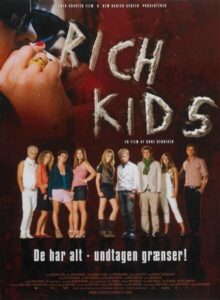
Rich Kids Poster

Rich Kids (2007) – A Raw Portrait of Privilege and Collapse

The film Rich Kids, released in 2007 and directed by Rune Bendixen, plunges into the lives of affluent young adults in Denmark: glamorous settings, private schools, summer parties—but underneath the sheen lie drugs, neglect, emptiness. The story follows a group of rich kids who try to drown their parents’ absence and their own existential drift in alcohol, sex and reckless behaviour. (Source: IMDb synopsis)

Plot Overview

These privileged youths, born into old-money families, are largely free from financial worry—but they’re not free from emotional pain or identity crises. As their partying intensifies, so does the sense of collapse: identities blur, friendships fracture, and the façade cracks. It’s a story about how wealth doesn’t necessarily insulate you from suffering—and sometimes amplifies it.

A Take from Rich Kids 2007

What Works – From My Perspective

Watching Rich Kids, what struck me first was how the film refuses easy judgments. Yes, the characters behave terribly—but the camera doesn’t mock them; it watches. It allows the viewer to feel their boredom, their desperation, their attempt at finding some meaning in a gilded cage. I found the performances unnerving and unglamorous in a way that felt more honest than glitzy youth-drama fare.

The cinematography and production design add to the sense of hollow decadence—beautiful houses, sleek interiors, but always with a lurking emptiness. The film asks: what happens when you inherit everything except purpose? For me, this question lingered after the credits rolled.

Positive Notes from Reviews

On IMDb, one user review highlights a major strength:

“Good Stuff: The halfway documentary style with the fake interviews is great. Makes the story much more believable and realistic.”

(IMDb user review)

Another user wrote:

“Some of it is good … the halfway documentary style … but still even then parts of it are utter terrible.”

(IMDb user review)

Actors from the movie Rich Kids

While neither of those reviews is full-blown praise, they point out a key aspect of the film that works: its semi-documentary/comedy similar to other comedy movies approach gives it authenticity. I could not locate a publicly accessible positive review on Houston Public Media explicitly about Rich Kids; if you’d like, I can dig further into regional outlets or archival sources to find direct quotes.

My Personal Take – Why It Resonates

For me, Rich Kids felt like a cold mirror held up to an elite world I seldom see portrayed so starkly. It didn’t romanticise the lifestyle; instead it showed how the appearance of freedom and unlimited resources can mask a deeper lack of direction. I appreciated how the film forced me to feel uncomfortable—not because the characters are likeable, but because they’re real in their emptiness.

Some scenes lingered: when the party ends, the quiet dawn, the youth look around and realise perhaps they don’t know why they’re here. That moment stuck with me. It’s rare for a youth-culture film to slow down and let that breath happen.

Where It May Fall Short

Screenshot from Rich Kids 2007

That said, Rich Kids isn’t perfect. From my view, the pacing sometimes drags—especially when the film shifts into party-montage mode without deeper insight. The characters, while authentic, are hard to root for, and if you seek clear redemption arcs or uplifting closure you won’t find them here. The style-over-substance criticism some users mention feels partially valid.

Conclusion

In summary, Rich Kids (2007) is not a feel-good film—it’s an unsettling one. But for those willing to lean into its discomfort, it delivers a potent portrait of wealth’s shadows and youth’s confusion. It’s not for everyone, but I found it compelling in its honesty and aesthetic restraint.

If you’re looking for a film that doesn’t offer easy answers but instead invites reflection on privilege, emptiness and identity, this one is worth your time.


Posted on — Leave a comment

Exploring Capsule (2015): A Cold-War Sci-Fi Drama

Capsule (2015) DVD

There are space movies that dazzle you with cosmic vistas and explosions — Gravity, The Martian, Interstellar — and then there’s Capsule (2015), which quietly pulls you into the headspace of one man who’s just trying to make it home alive.

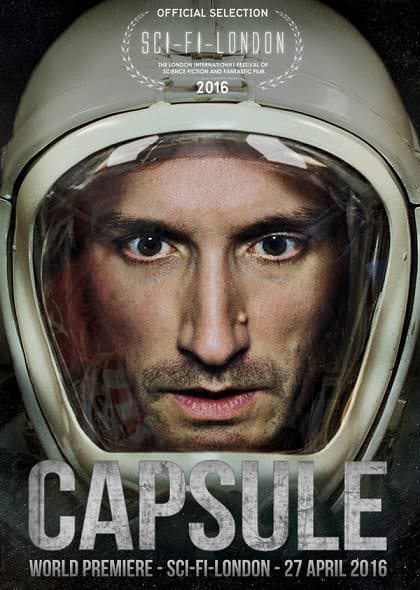
Directed by Andrew Martin, this British sci-fi drama is set in 1959, during the height of Cold War paranoia. The story follows Guy Taylor, played by Edmund Kingsley, a British test pilot chosen for the UK’s first manned space mission. Once in orbit, everything starts to go wrong — equipment malfunctions, radio signals cut out, and every breath inside the tiny capsule feels like it might be his last.

Not What It Seems

I’ve seen plenty of “astronaut in danger” movies, but what struck me about Capsule is how small and human it feels. Just like Alex Billington wrote in his review of Capsule the movie here’s no sweeping score or endless CGI; just Guy, his flickering instruments, and voices crackling through static. Sometimes he’s speaking with British command, sometimes it’s the Americans or the Russians — and at a certain point, even we’re not sure who’s really on the other end.

Screenshot from the Capsule film

The film relies almost entirely on Kingsley’s performance, and honestly, he carries it well. He manages to convey panic, exhaustion, and eerie calm all within that cramped cockpit. It reminded me of Sam Rockwell in Moon (2009) — another one-man sci-fi drama that thrives on atmosphere rather than spectacle.

Comparisons to Other Sci-Fi Drama / One-Man / Isolation Films

To appreciate where Capsule fits in the landscape of sci-fi dramas, here are a few comparison points:

Film Similarities Key Differences / Contrast
Gravity (2013) High tension in space; life-support failure; isolation. Gravity has more dynamic visuals, rescue attempts, multiple protagonists; more spectacle.
Moon (2009) Isolation, psychological strain, limited cast, internal conflict Moon has more elaborate mystery and identity twist; more developed world-building
The Martian (2015) Survival under constrained resources, ingenuity under duress More upbeat tone, more external interaction, larger scale
Cast Away (2000)* (non-sci fi) The idea of one person battling environment & loneliness Cast Away is terrestrial and survival is more physical and less technical

Like Gravity (2013), Capsule uses isolation as its real antagonist. But while Sandra Bullock’s journey is a fight against chaos, Guy’s feels like a battle against silence and mistrust — political, personal, even psychological. You can almost feel the air thinning with every minute.

Edmund Kingsley in the movie Capsule

Visually, Capsule makes the most out of its limitations. This film like other Sci-Fi Movies takes place inside that metal shell, and yet it never feels lazy. Instead, the claustrophobia becomes part of the storytelling — you feel trapped with him, counting seconds, waiting for a voice to break the silence.

It’s definitely not for everyone — the pacing is slow, and it leans more toward psychological tension than action. But if you like your sci-fi with a touch of realism, a dash of historical context, and a focus on human endurance, it’s worth watching.

Conclusion

For me, Capsule sits somewhere between Gravity and Moon, but with a distinctly British flavor — quiet, tense, a little melancholic, and full of understated bravery. It’s the kind of film that makes you appreciate how fragile both technology and human faith can be when you’re floating alone above the Earth.

Posted on — Leave a comment

HeartChild (2013): A Mother’s Love, Skateboards, and the Power to Change Lives

Heart Child (2013) Movie

The moving 2013 documentary HeartChild tells a story of courage and compassion.


An Emotional Journey Through Love and Resilience

HeartChild (2013) is a touching documentary directed by Ben Duffy that follows the life of Crys Worley, a mother whose story is as raw as it is inspiring.
The film centers on her relationship with her autistic son Sasha Worley, and the challenges, heartbreaks, and triumphs they face together.

Alongside Crys and Sasha, as ESPN describes it the documentary features people close to their lives, including Fallon Worley, Darlene Newborn, and Peter Karvonen, giving a human and emotional perspective to their story.

It’s a deeply personal film — one that reminds us that love and persistence can turn pain into purpose.


Crys Worley and the A.Skate Foundation

One of the most powerful aspects of HeartChild is the creation of the A.Skate Foundation, founded by Crys Worley herself.
The foundation’s name stands for Autism: Skating with Kids through Acceptance, Therapy, and Education, and its mission is both simple and groundbreaking — to use skateboarding as a bridge for children with autism.

Through skateboarding clinics and events, A.Skate gives kids on the spectrum a way to build confidence, coordination, and connection.
It’s not just a hobby — it’s therapy in motion.

The film captures the joy and determination of these children as they roll down ramps, learning balance in more ways than one.
For Crys, A.Skate becomes a channel for her energy, compassion, and advocacy. Watching her bring hope to others while fighting her own battles makes HeartChild profoundly moving.


The Emotional Impact of HeartChild

Watching HeartChild leaves a lasting impression. It’s the kind of film that changes how you see the world — especially the realities of families living with autism.

Here’s what makes it so impactful:

❤️ It Fosters Understanding

Crys Worley’s honesty draws viewers into the everyday highs and lows of parenting a child with autism. There’s no sugarcoating — just truth, love, and persistence.

🛹 It Inspires Hope

When Crys channels her challenges into building A.Skate, we see the transformation of pain into purpose. It’s a reminder that resilience can lead to remarkable change.

🌍 It Reframes “Support”

HeartChild doesn’t portray autistic children as fragile — it shows them thriving, skating, and smiling. It breaks stereotypes and encourages empowerment.

✨ It Stays With You

By the end, you don’t just understand the story — you feel part of it. The documentary makes you want to act with more compassion, to help, and to believe in what’s possible.


A Personal Opinion: Why HeartChild Moves Me

Personally, HeartChild touched me because it’s not about perfection — it’s about persistence.
Seeing Crys Worley’s quiet strength and her son’s growth made me appreciate how love, in its purest form, can move mountains.

The documentary doesn’t rely on dramatics. It’s simple, honest, and powerful — and that’s what makes it so beautiful.
It reminds us that real heroism often happens far from the spotlight — in small moments, in families, in communities that choose kindness.


Why You Should Watch It

If you’ve never seen HeartChild, you’re missing out on one of the most heartfelt independent documentaries of the 2010s.
It’s uplifting, emotional, and full of real human warmth.

  • Director: Ben Duffy

  • Starring: Crys Worley, Sasha Worley, Fallon Worley, Darlene Newborn

  • Focus: Autism, family, resilience, and the founding of the A.Skate Foundation

  • Genre: Documentary, 2013


Final Thoughts

HeartChild is more than a film — it’s a message.
It shows that love doesn’t stop where difficulty begins, and that sometimes a skateboard can be a bridge between worlds.

If you’re looking for a movie that will make you feel hope, compassion, and admiration for the quiet heroes among us, HeartChild is one you shouldn’t miss.

Posted on — Leave a comment

Last Ferry Home (1992) – A Journey into Memory and Melancholy

Last Ferry Home DVD

Some films find their way to you quietly, almost by accident, and yet they stay with you longer than blockbusters ever could. Last Ferry Home (1992) is one of those hidden treasures—a film that whispers rather than shouts, inviting you into its world of memory, silence, and reflection.

A Story Told in Silences

At its heart, the film follows a family returning to their roots, bound together by the subtle weight of memory, grief, and the unspoken words that hover between generations. The ferry ride itself becomes a metaphor—a crossing not just of water, but of time, regrets, and the fragile ties that hold us together. There are no big explosions of drama here, no neatly tied endings. Instead, the movie breathes, letting the viewer sit with its quiet honesty.

What stayed with me most wasn’t the dialogue, but the pauses. That stillness reminded me of my own family trips—those journeys back home where the landscapes themselves seemed to carry history, where silence said more than words ever could.

Roxanne Hart in Last Ferry Home

Filming Locations – Where Memory Meets Landscape

Much of Last Ferry Home was filmed along the Irish coastline, particularly near County Cork and the rugged inlets of West Cork’s ferry crossings. These areas are known for their windswept beauty—rolling green hills meeting grey waters under skies that change by the hour. The use of authentic ferry docks, small coastal villages, and the hauntingly quiet harbors give the film a sense of place that feels alive, as if the landscape itself were another character in the story.

For anyone who has ever traveled along Ireland’s southern coast, you’ll recognize the narrow roads winding through stone walls, the timeless pubs standing by the sea, and the ferries that carry locals and visitors alike between scattered islands. These backdrops ground the story, making the film feel rooted not only in family history but also in the cultural rhythms of rural Ireland.

Waterfront Boats

Why It Matters

Films like Last Ferry Home remind us that cinema isn’t always about spectacle—it can also be about evoking a feeling, about nudging us toward reflection. Watching it, I felt the strange pull of nostalgia even for places I’ve never lived in, and the odd comfort of recognizing the universality of family stories, no matter how particular they are.

Ireland Scenery Images

A Rare DVD You Can Actually Own

Like many underappreciated films of the early ’90s, Last Ferry Home was never given a wide release. That’s why finding a copy can be a challenge for collectors and cinephiles. Thankfully, the rare DVD edition of Last Ferry Home (1992) is available right here. It’s region free, carefully preserved, and ready to take its place on the shelf of anyone who values films that are both rare and meaningful.

If you’re building a collection of films that speak to the quieter, more contemplative side of cinema, this title deserves to be part of it.